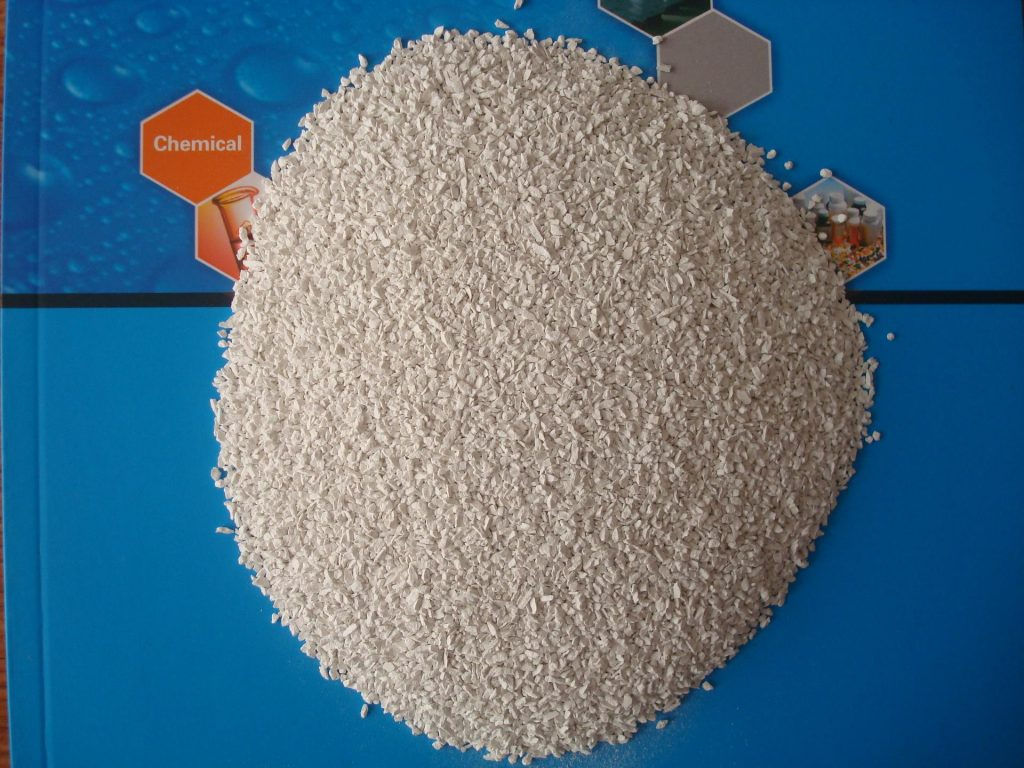
Bleaching powder (calcium hypochlorite, Ca(ClO)₂) contains 60–75% available chlorine, significantly higher than ordinary bleaching powder (30–38%). Its production revolves around the lime–chlorine reaction.
1. Two Main Processes
Calcium process (traditional): Hydrated lime is directly chlorinated:
2Cl₂ + 2Ca(OH)₂ = CaCl₂ + Ca(ClO)₂ + 2H₂O
Low cost, but product stability is moderate.
Sodium process (upgraded): Caustic soda is introduced to improve product purity and stability, though at higher cost.
2. Key Technical Details
Moisture activates the reaction: Absolutely dry lime does not react with chlorine. It is essential to control hydrated lime moisture <1% and chlorine moisture <0.06%. This allows chlorine to hydrolyse into hypochlorous acid, which then neutralises the lime to initiate the reaction.
Rapid drying to prevent wall sticking: The crude product after reaction contains 40–50% moisture. A rotary dryer with scraper blades is used, with hot air at 130–170°C and material residence time ≤5 seconds, preventing build‑up and ensuring product quality.
3. Bleaching Mechanism
The active ingredient, calcium hypochlorite, reacts with water or carbon dioxide to generate strong oxidising hypochlorous acid:
Ca(ClO)₂ + CO₂ + H₂O = CaCO₃↓ + 2HClO
Hypochlorous acid destroys colourants and microorganisms through oxidation, achieving bleaching and disinfection.