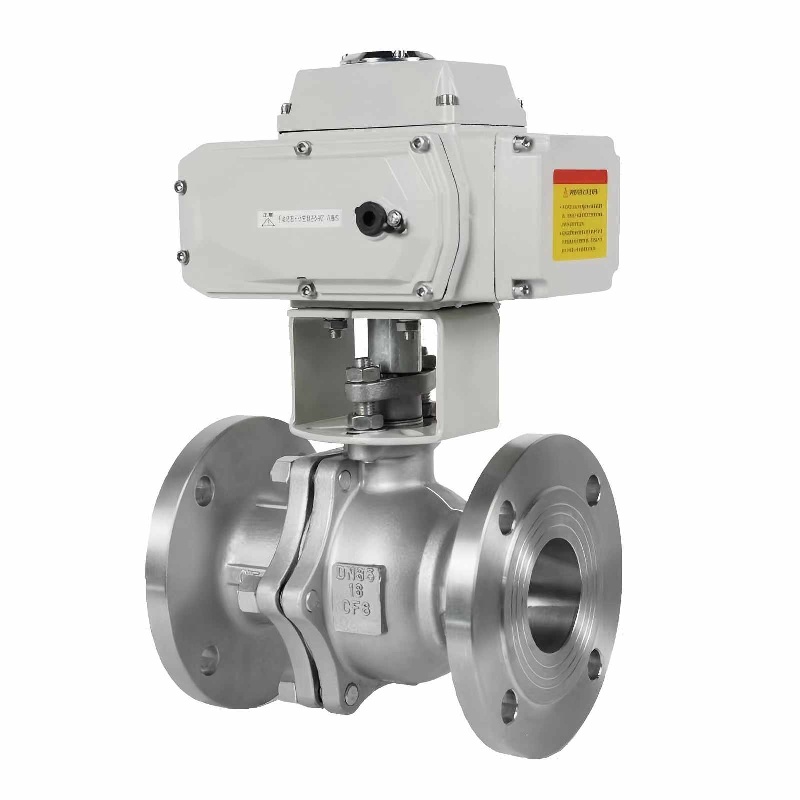
Why don't all chemical plants use pneumatic valves?发表时间:2025-07-18 17:26 In chemical plants, the choice of pneumatic valves and electric valves depends on the specific working conditions. Both have their own advantages and applicable scenarios. The following are the main reasons: 1. Safety and explosion-proof requirements Pneumatic valves: Powered by compressed air, there is no risk of electric sparks, excellent explosion-proof performance, and suitable for flammable and explosive environments (such as petrochemical and chemical workshops). Especially in situations where emergency shut-off or frequent operation is required, pneumatic valves have a fast response speed (usually within 1 second) and higher reliability. Electric valves: Although explosion-proof electric valves can also meet safety requirements, motor and circuit failures may generate sparks and have high maintenance costs. Therefore, pneumatic valves are still the first choice in high-risk areas. 2. Adjustment accuracy and control requirements Electric valves: High-precision adjustment (accuracy up to ±0.1%) can be achieved through intelligent actuators, which are suitable for situations where precise control of flow and pressure is required (such as laboratories and precision reactors). Its control method is flexible, supports remote programming and complex logic, and is more compatible with PLC/DCS systems. Pneumatic valves: The adjustment accuracy is low (±0.5%~1%), but the positioner can meet the general control requirements, which is suitable for scenarios with low accuracy requirements but fast response (such as switch control of large pipelines). 3. Installation and dependence on air source Pneumatic valves: Relying on a stable air source, it needs to be equipped with air compressors, filtering equipment, etc. The initial construction cost is high, and the laying of air source pipelines is complicated. If the factory already has an air source system (such as an air compressor station), the long-term operating cost of pneumatic valves is low. Electric valves: Only power is required, and the installation is flexible, especially suitable for areas without air source or remote areas. For example, in small devices or temporary renovation projects, electric valves do not require air source support and are more convenient. 4. Cost and maintenance Pneumatic valves: Simple structure, low failure rate, low maintenance cost (such as replacement of seals), but regular inspection of air source pressure and pipeline sealing is required. Electric valves: Complex internal structure (motor, reducer, control circuit), professional technology is required for maintenance, and the initial investment is high. But in the long run, it may be more economical without air source maintenance. 5. Special working conditions High-pressure and large-diameter systems: Pneumatic valves have greater torque and are suitable for high-pressure and large-diameter pipelines (such as steam control in the power industry). Anti-interference: In a strong electromagnetic environment, pneumatic valves are not interfered with, while the control circuit of electric valves may malfunction. Summary Chemical plants do not rely entirely on pneumatic valves, but choose according to specific scenarios: Pneumatic valves are preferentially used in explosion-proof, fast-response, high-pressure or safe position loss (such as automatic closure due to air loss). Electric valves are suitable for scenarios that require high-precision regulation, no air source support, or complex control logic. The two complement each other and jointly meet the diverse process requirements of chemical plants.
|